
Last updated October 16, 2026
 Wrought iron
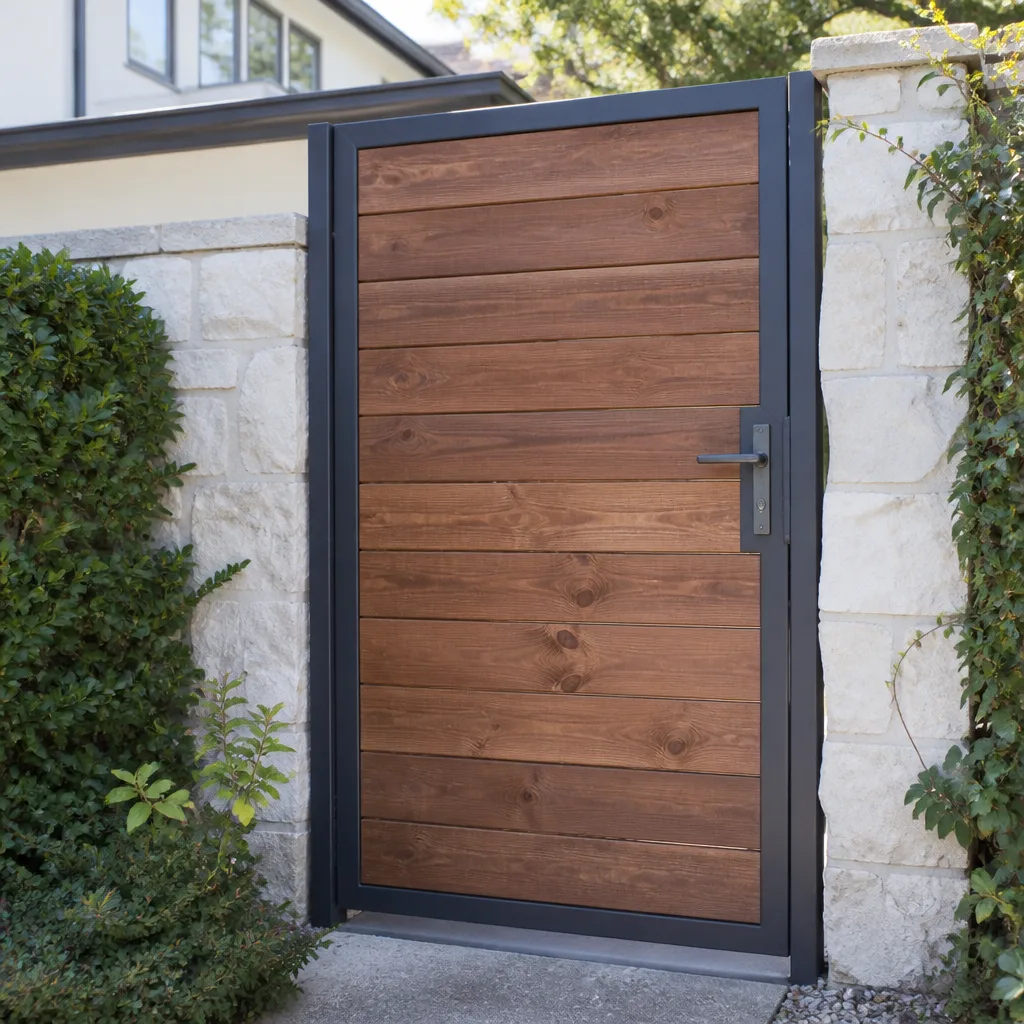 Wood & steel frame
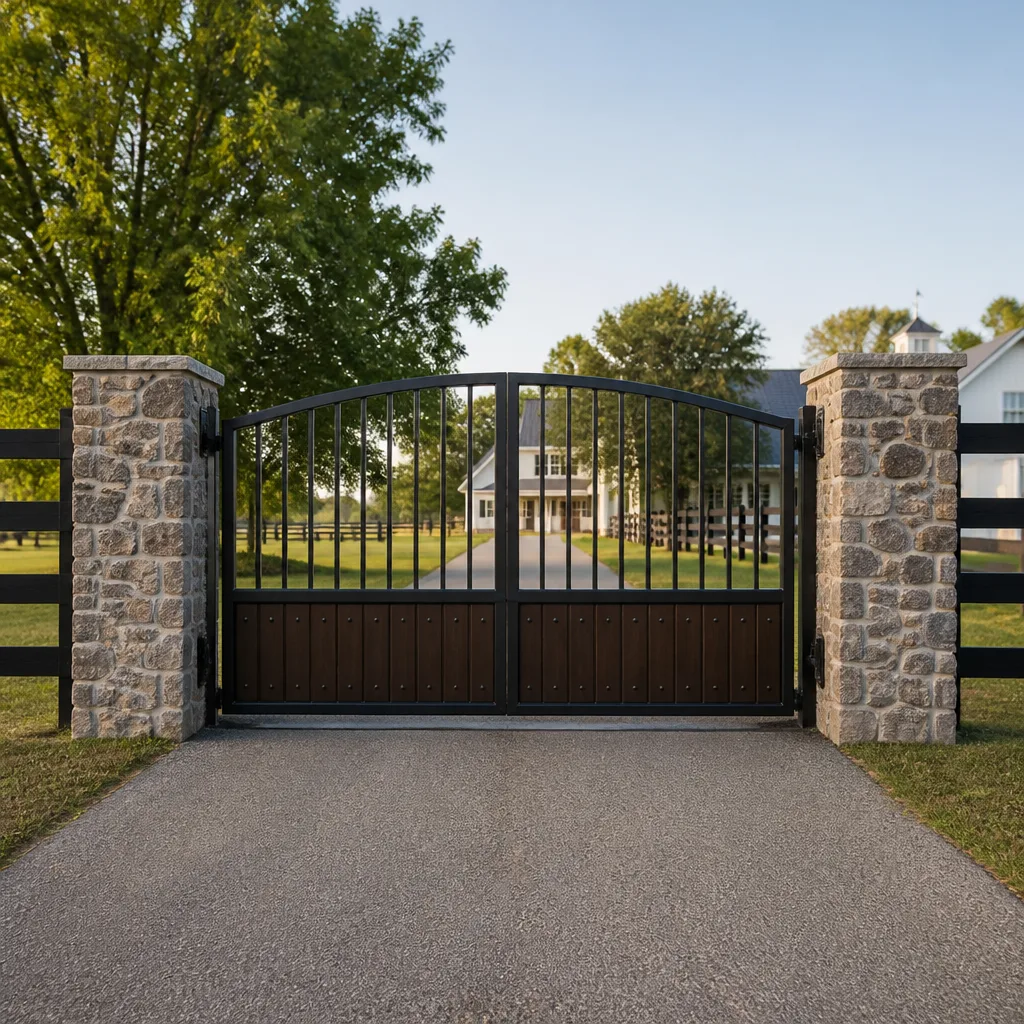 Farm & ranch
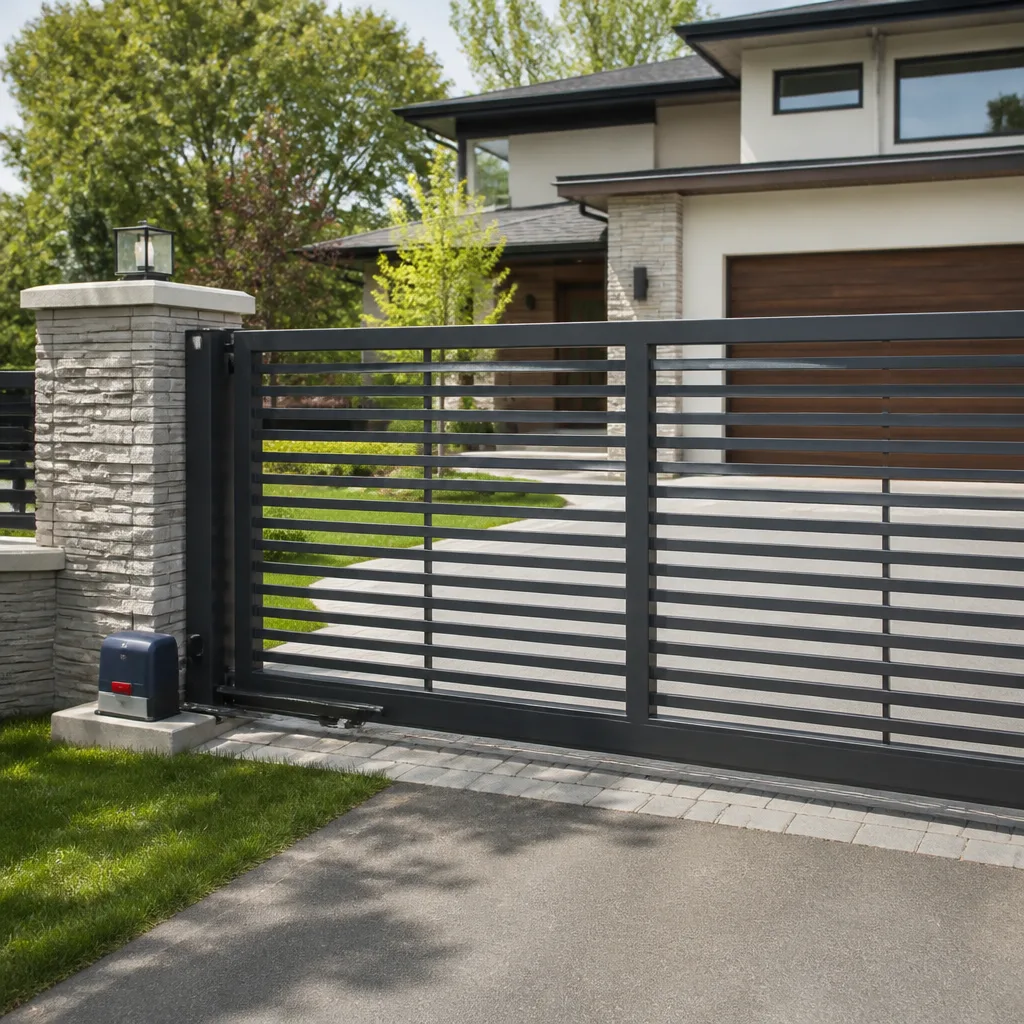 Sliding driveway gates
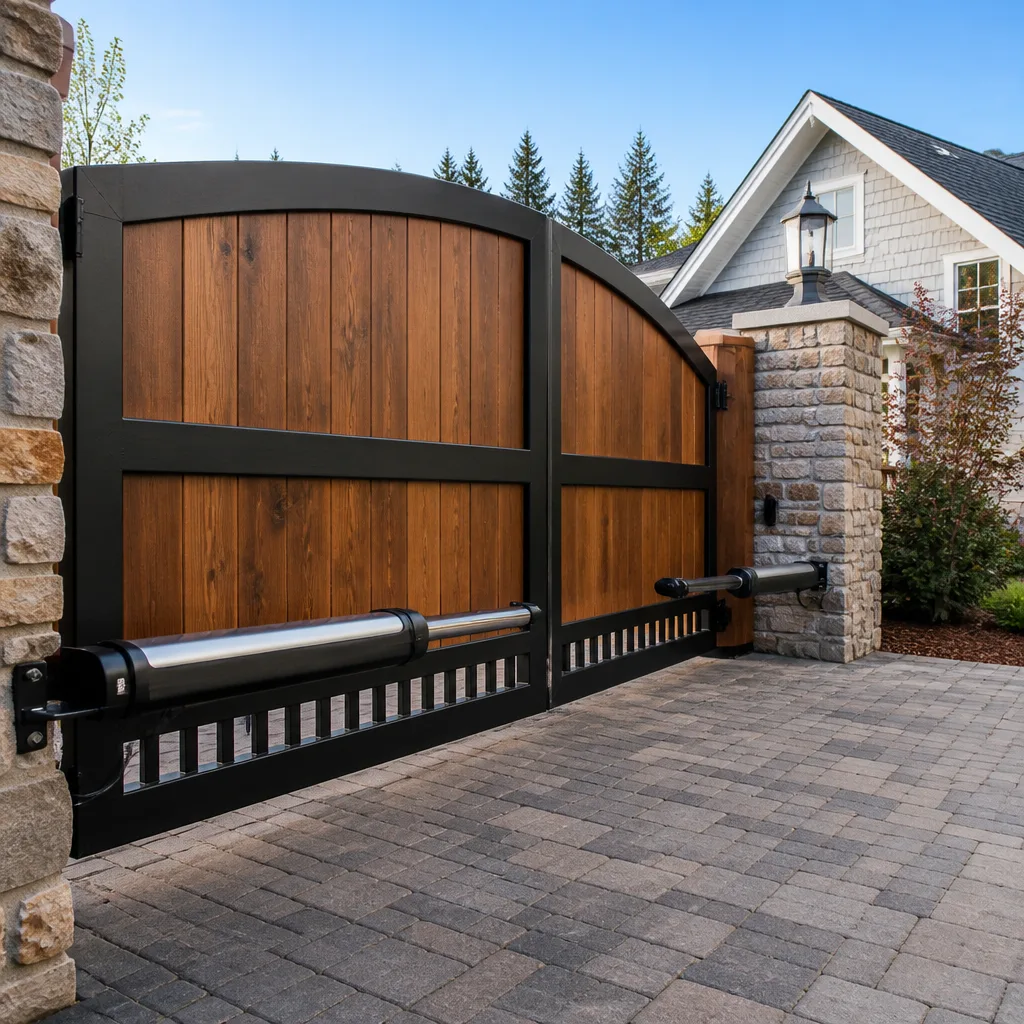 LiftMaster operators
Free on-site gate assessment - hinges, posts, and your LiftMaster or Nice gate operator checked before anything is quoted
The assessment is free and the quote is the invoice.
Get your free estimateGate Repair Warning Signs: A Ventura Homeowner’s Reference Guide
The grinding noise a sliding gate makes on a Monday is not the same problem as the grinding noise it makes on a Friday. The interval between those two sounds is the actual warning sign, and it’s telling you exactly how fast your rollers are degrading. Most Ventura homeowners dismiss the first screech as a quirk, the second as weather, and the third as someone else’s problem until the gate refuses to open at 11 p.m. on a Tuesday. This guide decodes what your gate has been trying to tell you for weeks. You’ll learn which sounds mean what, which behaviors signal a failing component, which visual cues reveal structural trouble, and most importantly, which warnings demand you shut the operator down today rather than next month.
Quick Answer
A gate that needs repair announces itself through specific sounds (grinding, clicking, humming without movement), behaviors (slow operation, partial closing, mid-cycle reversals), and visual cues (rust streaks, sagging, gaps at the post). The most urgent warnings, including a gate that reverses on its own or a motor that hums but doesn’t move the gate, mean the operator should be shut off until a professional inspects it. In Ventura, coastal corrosion accelerates these failures faster than inland homeowners typically expect.
Styles & brands we work with
Table of Contents
- The Symptom-to-Cause Index: What Your Gate Is Actually Saying
- Decoding Gate Sounds: Grinding, Clicking, and the Ominous Hum
- Behavior Warnings: Slow Opens, Partial Closes, and Random Reversals
- Visual Signs You Can Spot Without Tools
- Ventura-Specific Warnings: What the Coastal Air Does to Your Gate
- Why Your Gate Reverses Mid-Cycle: A DIY Diagnosis Using Only a Timer
- How to Document Warning Signs Before You Call a Technician
- Safety-Critical Failures That Warrant Immediate Shutdown
The Symptom-to-Cause Index: What Your Gate Is Actually Saying
Gates fail in predictable patterns. The symptom you notice first, whether it’s a sound, a hesitation, or a visible change, maps to a specific component in most cases. We’ve worked on gates across Ventura since 2008, from the hillside properties above Foothill Road to the beach-adjacent homes near Pierpont, and the failure patterns repeat with remarkable consistency. Here’s what we see most often.
When you hear a grinding or metal-on-metal scrape from a sliding gate, the rollers or the track are the prime suspects. Roller bearings wear out, especially when salt air from the Pacific accelerates corrosion on steel components. When a swing gate creaks or groans at the hinge points, the hinge pins or bushings are binding. A gate that hums but doesn’t move almost always points to a failed motor capacitor or a stripped gear inside the operator. And a gate that starts and stops erratically, or reverses for no apparent reason, is usually fighting a bad limit switch, a failing capacitor, or a misaligned photo eye.
The key insight most homeowners miss: these symptoms don’t arrive alone. A grinding roller puts extra strain on the motor, which draws more current, which overheats the capacitor, which eventually kills the operator entirely. The symptom you notice today is often the second or third stage of a failure chain that started weeks ago. That’s why early intervention matters more than most people think.
Most Common Symptom-to-Cause Map
- Grinding or scraping on a sliding gate: Worn rollers, rusted track, or debris buildup in the track channel. In Ventura, salt-accelerated rust on steel rollers is a leading cause.
- Creaking or groaning on a swing gate: Dry or corroded hinge pins, failing bushings, or a slightly sagging gate leaf putting uneven pressure on the hinges.
- Clicking with no movement: A failing limit switch trying to engage, a stripped gear in the operator, or a dead capacitor clicking as the motor attempts to start.
- Humming with no movement: A motor that’s getting power but can’t turn the drive mechanism. Failed capacitor, seized gearbox, or a gate bound against the track or post.
- Slow operation, especially in one direction: Dying motor capacitor, low voltage at the operator, or mechanical drag from worn rollers or a misaligned track.
- Gate stops halfway or closes partially: Misadjusted limit switches, failing travel module, or an obstruction sensor triggering falsely.
- Random reversals during opening or closing: Bad limit switch, failing motor capacitor, or photo-eye misalignment (more on this below).
- Visible sag on a swing gate: Worn hinge pins, loose post brackets, or a compromised post due to corrosion at ground level.
If you’re noticing any of these signs, a professional Gate Repair in Ventura inspection can pinpoint the exact component before the failure cascades. Catching a worn roller at the grinding stage costs a fraction of replacing a burned-out operator six weeks later.
Decoding Gate Sounds: Grinding, Clicking, and the Ominous Hum
Your gate speaks a pretty specific language. Each sound corresponds to a particular type of mechanical or electrical stress, and learning the vocabulary takes about ten minutes. The three sounds that matter most in Ventura are grinding, clicking, and the hum-without-movement.
Grinding on a sliding gate is a metal-on-metal sound, often rhythmic, that changes pitch as the gate passes certain points on the track. It means a roller bearing has failed or the track has developed a rough spot. The pitch of the grind tells you something about severity: a smooth, consistent grind usually means even roller wear; a chunky, stuttering grind often means one or more rollers have flat-spotted or the track has a gouge. Either way, the gate is dragging more weight than the motor was designed to pull, and that extra load transfers directly to the operator’s gearbox and capacitor. We’ve replaced motors in Ventura’s Ventura Keys neighborhood that died at three years old because the owners let a grinding roller run for months. The motor didn’t fail because it was cheap; it failed because it was forced to push a gate that was fighting back.
Clicking is a different warning. A single click when you press the remote or keypad usually means the control board is receiving the signal but the motor isn’t starting. A rapid series of clicks, almost like a ratchet sound, often points to a failing limit switch or a stripped gear. On DoorKing and Elite operators, which have more exposed limit switch assemblies than some other brands, the clicking is particularly diagnostic. On LiftMaster units, a click followed by a soft hum and no movement is the classic failed-capacitor signature.
The hum-without-movement is the one that worries us most. It means the motor is getting power, the capacitor is likely working, and the motor is spinning or trying to spin, but the drive mechanism isn’t transferring that motion to the gate. Sometimes it’s a stripped gear, sometimes it’s a seized bearing, sometimes the gate has physically bound against the post or track. The dangerous part: a humming motor that can’t move a gate is drawing locked-rotor current, which generates heat. Run it too long and you’ll cook the motor windings, turning a $300 repair into a $1,500 operator replacement. If your gate hums but doesn’t move, turn the operator off and call someone.
Behavior Warnings: Slow Opens, Partial Closes, and Random Reversals
Behavior changes are easier to spot than sounds for most homeowners, because you don’t need to be listening at the right moment. You just notice that the gate takes longer than it used to, or stops in a different spot, or does something it never did before. These behavioral shifts are the gate’s way of compensating for a failing component.
Slow operation is the most common behavioral warning we see across Ventura. A gate that used to slide open in eight seconds now takes fifteen. A swing gate that used to move crisply now drifts open like it’s tired. The cause is almost always mechanical drag or electrical degradation. Mechanically, worn rollers, a dry hinge, or a track that’s collected sand and grit from ocean breezes will slow the gate down. Electrically, a failing capacitor reduces the motor’s starting torque, meaning it works harder to achieve the same movement. Either way, the fix is straightforward when caught early: replace the worn part or the capacitor, and the gate regains its old speed. Wait too long and the strain kills the motor.
Partial closes are another tell-tale behavior. A gate that closes 80% of the way and then stops, or opens fully but only closes halfway, is usually dealing with a limit switch problem. The limit switches tell the operator where the open and closed positions are. When one drifts out of adjustment or fails, the operator gets confused about where the gate actually is. Sometimes the fix is as simple as cleaning and re-adjusting the switch. Other times, on older Mighty Mule or BFT units, the limit switch assembly needs replacement.
Random reversals, where the gate reverses direction mid-cycle for no visible reason, are the behavior that sends most Ventura homeowners to Google. The gate will be closing normally, then suddenly reverse and open again, as if it sensed something in the path. The diagnosis is more complex than most people realize, which is why our How to Hire a Gate Repair Contractor in Ventura: A Step-by-Step Guide covers it in full.
Visual Signs You Can Spot Without Tools
Some warning signs don’t require you to touch anything or understand anything about gate mechanics. You just need to look. The visual cues that matter most fall into three categories: rust and corrosion, structural movement, and electrical wear.
Rust streaks on a gate are more than cosmetic, especially in Ventura’s salt air. When you see reddish-brown streaks running down from a bolt, a weld, or a hinge point, that’s active corrosion, and it’s eating the metal from the inside out. On painted or powder-coated gates, rust streaks mean the protective coating has failed at that spot, and the underlying steel or iron is oxidizing. In coastal neighborhoods like Pierpont or Hollywood Beach, where airborne salt accelerates corrosion dramatically, a small rust streak at a hinge can become a structural failure in a matter of months, not years. The gate leaf itself may be fine, but the hinge pin is rusting through, and that’s a failure waiting to happen.
Watch for a growing gap between the gate and the post. On a swing gate, a gap that widens at the top usually means the hinges are wearing and the gate is sagging. On a sliding gate, a gap between the gate frame and the track, or a gate that visibly tilts, means rollers are failing or the track has shifted. Either way, the gate is no longer moving in the plane it was designed to move in, which puts uneven stress on every other component.
Electrical signs are easy to miss if you’re not looking for them. A gate operator housing that’s yellowed, cracked, or shows white oxidation at the seams has been exposed to weather it wasn’t designed for. Inside, the control board terminals may be corroding, which leads to intermittent failures that are hard to diagnose. If your operator looks weathered, it’s worth having someone look inside before it fails completely.
Ventura-Specific Warnings: What the Coastal Air Does to Your Gate
Ventura’s climate is beautiful, and it is unkind to metal. The marine layer that rolls in most evenings carries salt and moisture, and it doesn’t stop at the coastline. Homes within a few miles of the ocean, which includes much of central Ventura, deal with accelerated corrosion on every exterior metal component. Gate hardware takes a particular beating because it includes so many different metal-to-metal contact points.
White oxide buildup on hinge pins and brackets is one of the most common Ventura-specific warning signs we see. This powdery white substance is aluminum or zinc corrosion, and it appears when dissimilar metals interact in the presence of salt moisture. A hinge pin that shows white oxide is binding, and binding hinges force the gate motor to work harder every single cycle. The oxide isn’t just a coating, it’s actively increasing the friction at the pivot point. Left untreated, the hinge binds completely and the motor either stalls or the hinge point fails structurally.
Salt pitting on welded joints is another coastal signature. Look closely at the welds on your gate frame, especially at the corners and where cross-members attach. If you see small pits, like the surface of the metal has tiny craters, that’s salt pitting. It weakens the weld, and on older gates that have been through several Ventura winters, those pits can compromise the joint enough that a hard wind or a minor impact cracks the weld. We see this most often on gates in the Ventura Avenue and Midtown areas, where many homes still have their original gate from decades ago.
UV chalking on powder-coat is the third coastal warning sign. Run your hand across the gate surface. If your palm comes away with a fine, chalky residue, the powder-coat is degrading under UV exposure. The coating is what protects the metal underneath, so once it starts chalking, the gate’s protection is compromised. Chalking itself isn’t an immediate structural emergency, but it means the coating has reached the end of its functional life, and corrosion will follow. A gate that’s chalking needs re-coating or replacement sooner rather than later.
For more on how Ventura’s coastal conditions affect Electric Gate Repair in Ventura, our service pages cover the corrosion-specific issues we address on most calls.
Why Your Gate Reverses Mid-Cycle: A DIY Diagnosis Using Only a Timer
A gate that reverses in the middle of closing is one of the most common complaints we get from Ventura homeowners, and the cause isn’t always what you’d expect. The three most likely culprits are a bad limit switch, a failing motor capacitor, and a misaligned photo eye. You can narrow down which one you’re dealing with using only a stopwatch or your phone’s timer, plus a careful eye on the gate’s behavior.
The timer method works because each failure mode produces a distinct timing pattern. A bad limit switch usually causes reversals at a consistent point in the cycle. A failing capacitor causes reversals that happen at different points but often accompany slow or sluggish movement. A photo-eye misalignment causes reversals that happen randomly but only when the gate is closing, never when it’s opening. Here’s how to run the test.
- Time a normal opening cycle. Press the open button and start your timer. Note how long the gate takes to fully open. Do this three times and record the average.
- Time a normal closing cycle. Same process in reverse. Three cycles, average the time.
- Watch for where and when the reversal happens. Is it always at the same spot, like 70% closed? That points to a limit switch, because the operator is getting a false signal that the gate has reached the closed position when it hasn’t.
- Note the gate’s speed during the cycle. If the gate moves noticeably slower than it did a month ago, or slower in one direction than the other, and the reversal point varies, a failing capacitor is the likely cause. The motor isn’t getting enough torque to complete the cycle reliably.
- Check if the reversal only happens during closing. If the gate opens perfectly every time but reverses unpredictably when closing, look at the photo eyes. These are the small sensor units mounted on either side of the gate opening. If they’re misaligned, dirty, or obscured by plant growth (common in Ventura’s year-round growing season), they can send a false obstruction signal and trigger a safety reversal.
This three-way diagnosis isn’t just an academic exercise. Knowing which component is failing means you can describe the problem accurately when you call for service, which gets you a faster, more accurate quote. And if you’d rather skip the detective work entirely, we’re happy to diagnose it for you. A Gate Motor Repair in Ventura visit includes a full diagnostic, and the written price comes before any work starts.
How to Document Warning Signs Before You Call a Technician
When you call a gate repair company in Ventura, the person on the phone will ask you what’s wrong. The more specifically you can answer, the better the diagnosis will be. But here’s the thing most homeowners don’t realize: a week-old verbal description of a grinding noise is far less useful than a same-day photo and a simple log. Here’s how to document what you’re seeing and hearing so the diagnostic process takes minutes instead of guesswork.
- Start a simple note on your phone. The day you first notice something unusual, open a note and write the date, the symptom (grinding, slow open, whatever it is), and where in the cycle it happens. One or two sentences is enough.
- Record a short video of the gate in motion. Ten seconds is all you need. Prop your phone up so it captures the whole gate and record one full opening or closing cycle. If the sound is the issue, get close enough that the phone picks it up. Nothing communicates a failing roller or a groaning hinge like a five-second audio clip.
- Photograph the specific area of concern. Rust streaks, hinge corrosion, sag, track misalignment, whatever you’re seeing, get a photo. If possible, take one close-up and one wide shot so the technician can see both detail and context.
- Note the timing pattern. If the behavior is intermittent, write down when it happens. Does the gate grind only in the morning when it’s damp? Only after it’s been sitting for hours? Only when opening but never closing? The timing is diagnostic.
- Check the model name and brand of your operator. This is printed on the operator housing or inside the cover. Knowing whether it’s a LiftMaster, DoorKing, Mighty Mule, or Elite unit tells the technician what parts might be needed before they even arrive.
Documenting symptoms this way doesn’t just help the technician, it protects you. When you have a written log and visual evidence of a problem that started weeks ago, there’s no ambiguity about whether the issue is new or old. It also means you can compare quotes more effectively, because you’re describing the same symptoms to every company you call.
At Warden Gate Repair Ventura, every visit follows Warden Gate Repair Ventura home standards: you get the technician’s name and photo before arrival, so you know exactly who’s coming to your door. We’ve found that homeowners who document their gate’s warning signs feel more confident every step of the way, because they’re not relying on a stranger’s interpretation of a sound they heard once, three weeks ago.
Safety-Critical Failures That Warrant Immediate Shutdown
Most gate warning signs allow you some time to schedule a repair. Some don’t. There’s a category of failures where the responsible action is to shut off the operator immediately and leave it off until a professional can look at it. These failures involve the potential for injury or property damage, and the risk calculus doesn’t favor waiting.
The biggest one: a gate that reverses direction unpredictably or fails to stop at its limits. A gate that doesn’t know where it is can crush a car, a child, or a pet. If the gate is ignoring its travel limits, shut off the operator. This is non-negotiable. The same goes for a gate that closes with excessive force, which is a sign that the safety reversal system isn’t functioning. A properly functioning gate should stop and reverse with minimal resistance. If it powers through obstructions, the safety system has failed and someone will get hurt.
A humming motor that isn’t moving the gate also warrants immediate shutdown, though for a different reason. The motor is drawing locked-rotor current and generating heat. Every minute you let it hum is a minute of life you’re taking off the motor windings and the capacitor. Shut it off and call for service.
Any visible crack at a hinge point or weld, especially on a large or heavy gate, is a structural emergency in Ventura. A gate that could fall on someone is not a repair you defer. If you see a crack, rust bleed-through, or a gap that wasn’t there last month, turn the operator off and block the gate if you can. The gate may look like it’s holding, but a failing hinge or weld under tension is unpredictable.
Finally, any exposed or damaged wiring at the operator, especially after rain or irrigation work, should be treated as an electrical hazard. Turn the operator off at the breaker and don’t touch the wires. Electricity and moisture are a dangerous combination, and a gate operator runs on line voltage. This is not a handyman project.
Common Mistakes to Avoid
- Ignoring the first grinding sound and hoping it goes away. Roller bearings don’t self-heal. The sound persists because the wear persists, and the load on the motor increases every day you ignore it.
- Lubricating everything with WD-40. Spray lubricant on a gate track attracts dust and sand, which in Ventura’s coastal air creates a grinding paste that accelerates wear. Dry lubricants or professional-grade products are the right call, and only on the correct components.
- Replacing the operator when the problem is mechanical. A slow gate is often a mechanical drag problem, not a motor problem. If you replace the operator without fixing the worn rollers or binding hinge, the new operator inherits the same strain and fails early.
- Adjusting the limit switches without understanding the sequence. Small adjustments can make a gate overshoot its limits, creating the exact safety hazard you’re trying to fix. This one is better left to someone who’s done it before.
- Waiting until the gate fails completely to call. Every failure chain starts with a warning sign that would have been cheaper to fix than the resulting damage. A $40 roller replacement is always cheaper than a $1,800 operator replacement.
- Assuming salt air only affects beachfront property. Ventura’s marine layer carries salt well inland. Gates a mile or two from the ocean still experience accelerated corrosion, just on a slightly longer timeline.
- Hiring a general handyman for gate-specific work. Gate operators involve line voltage, safety systems, and brand-specific components. A gate specialist with factory training on your specific brand will diagnose faster and fix it right the first time.
See the difference
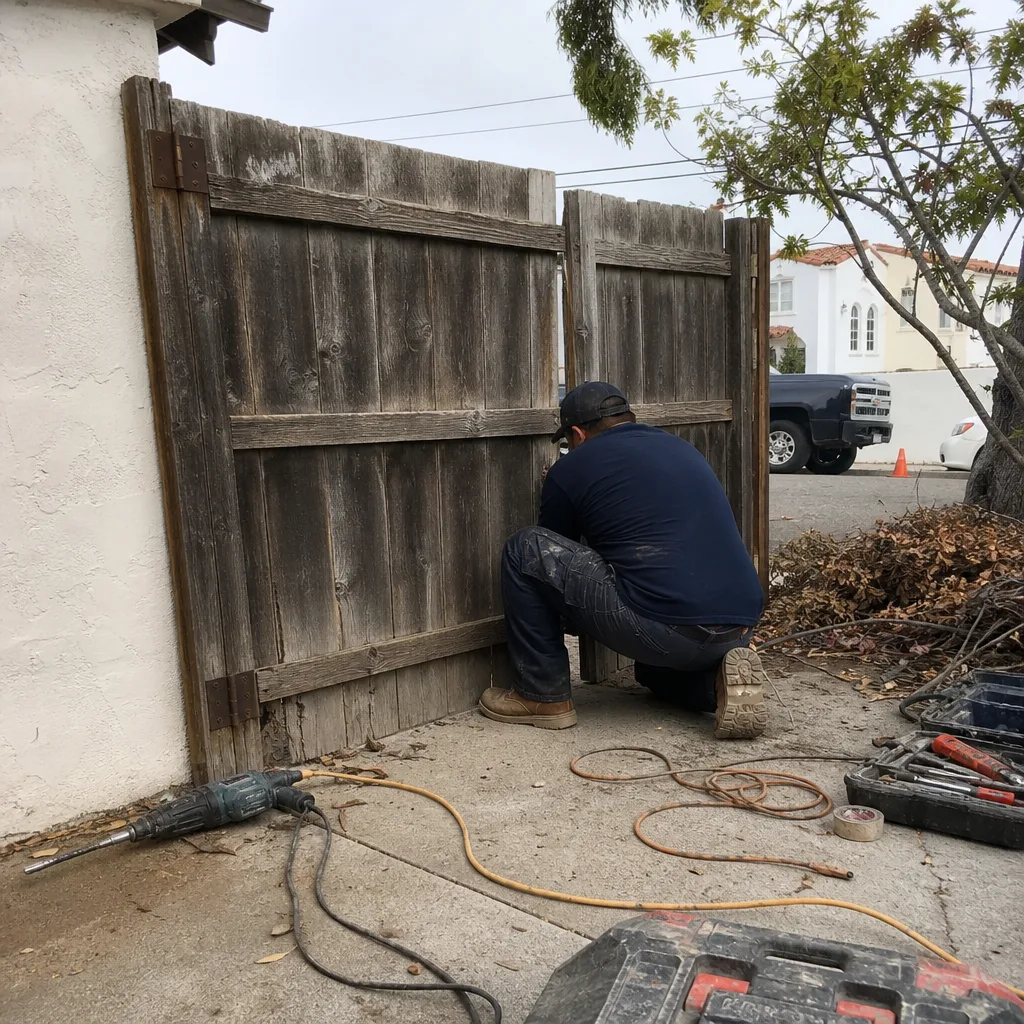 Before
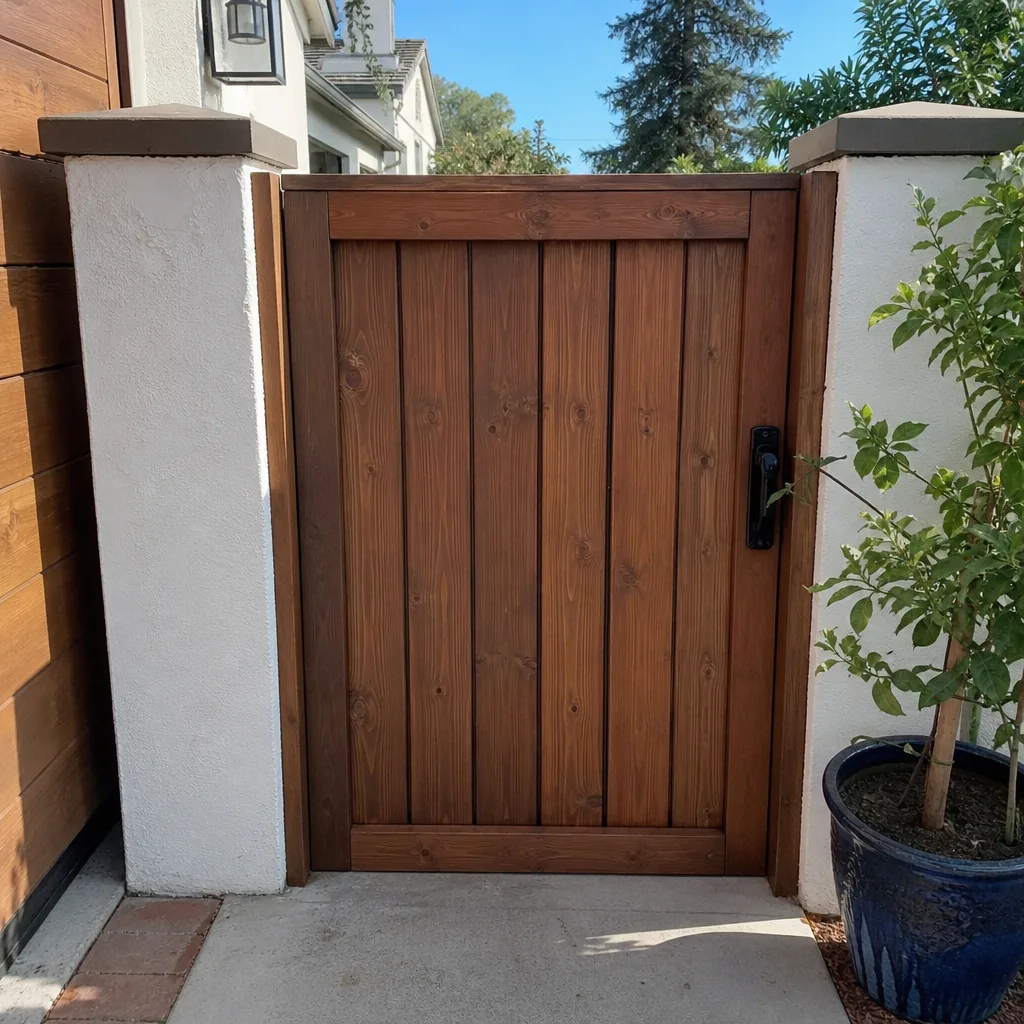 After
After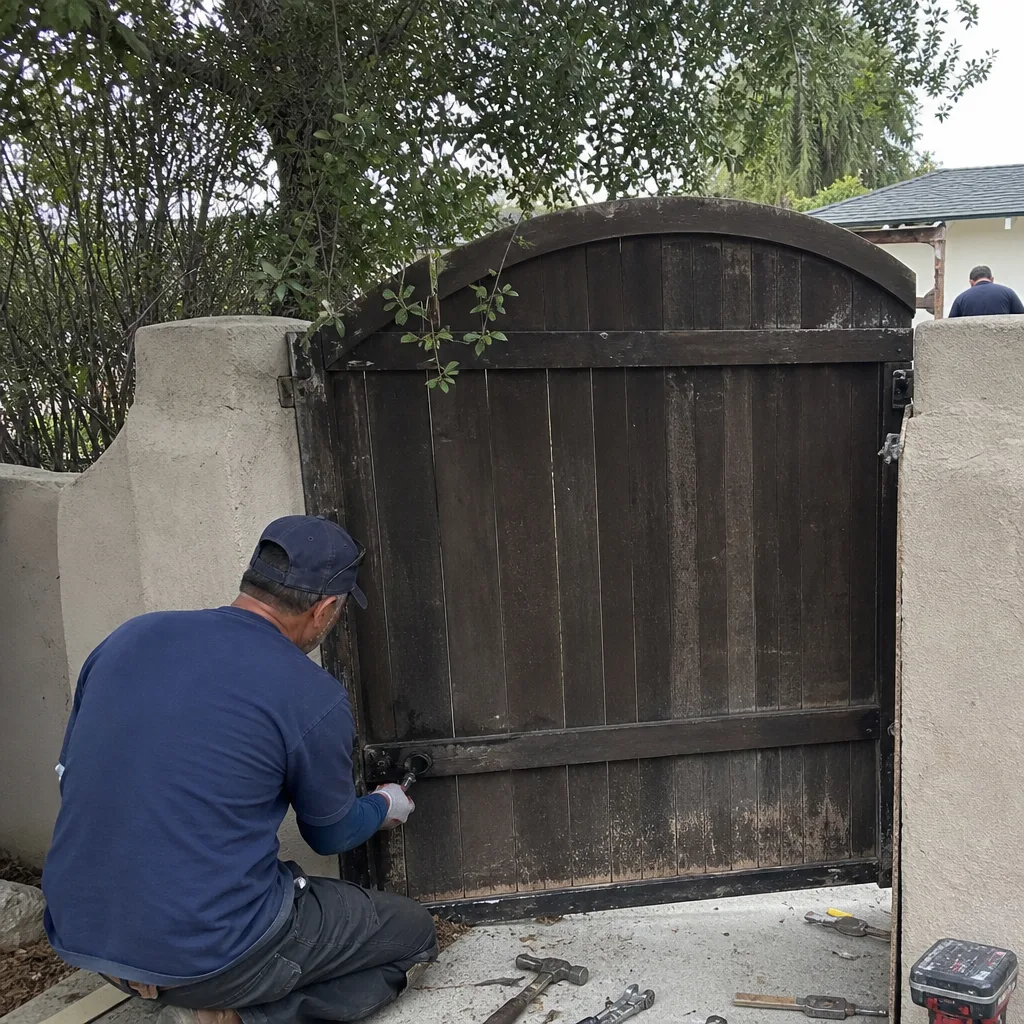 Before
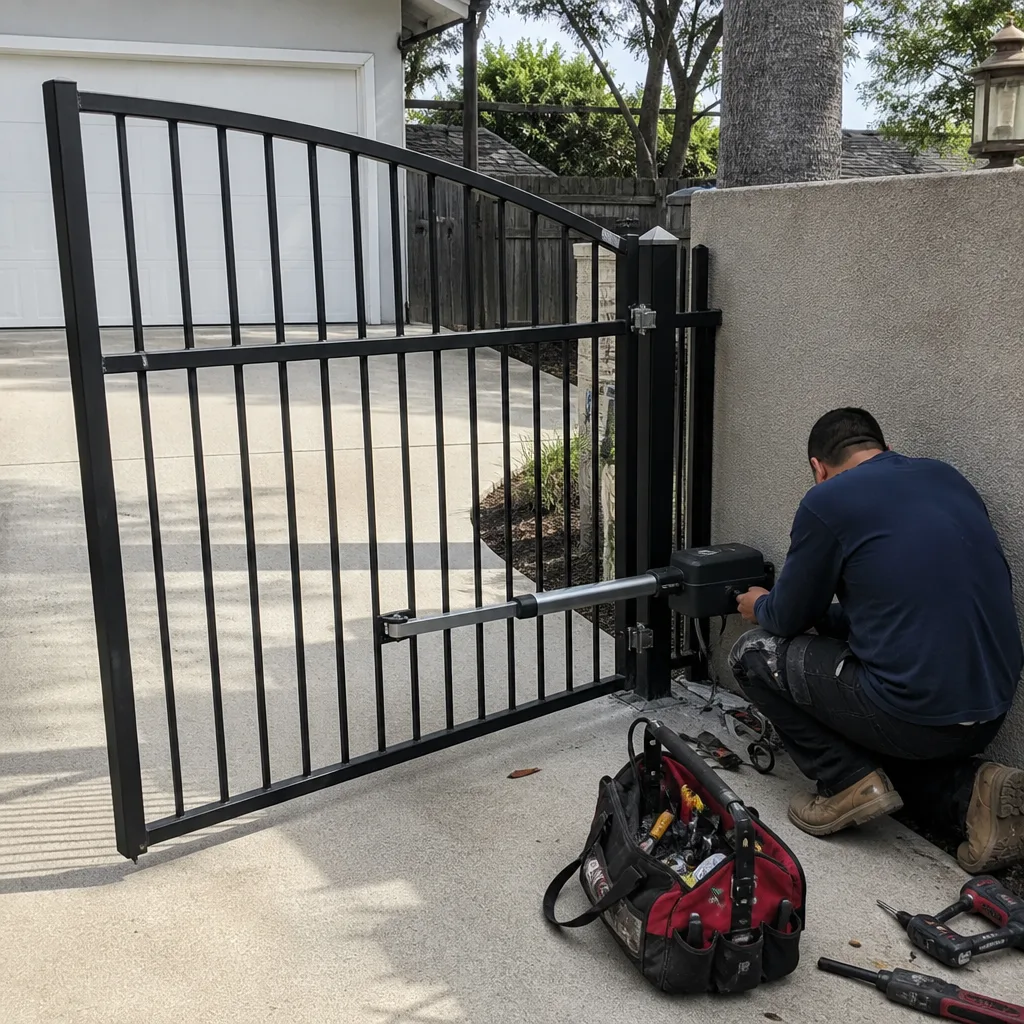 After
After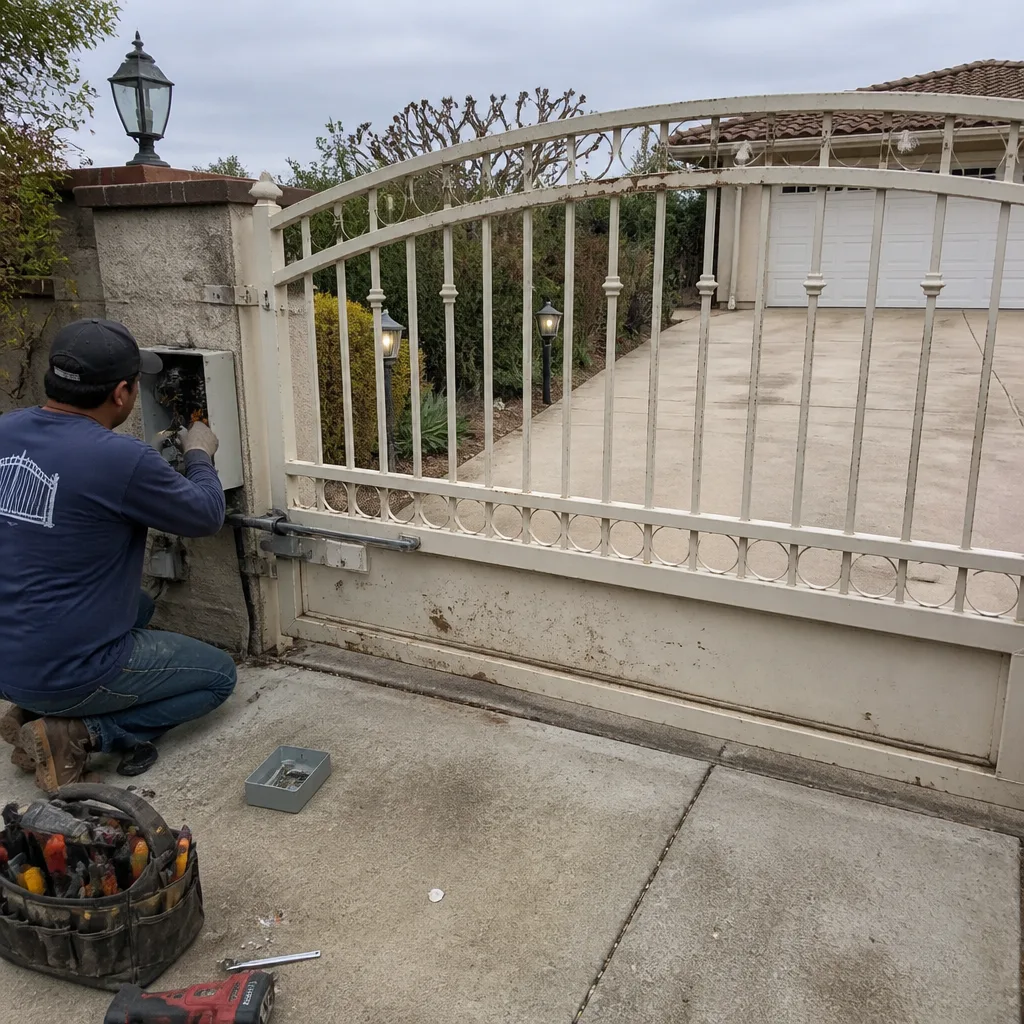 Before
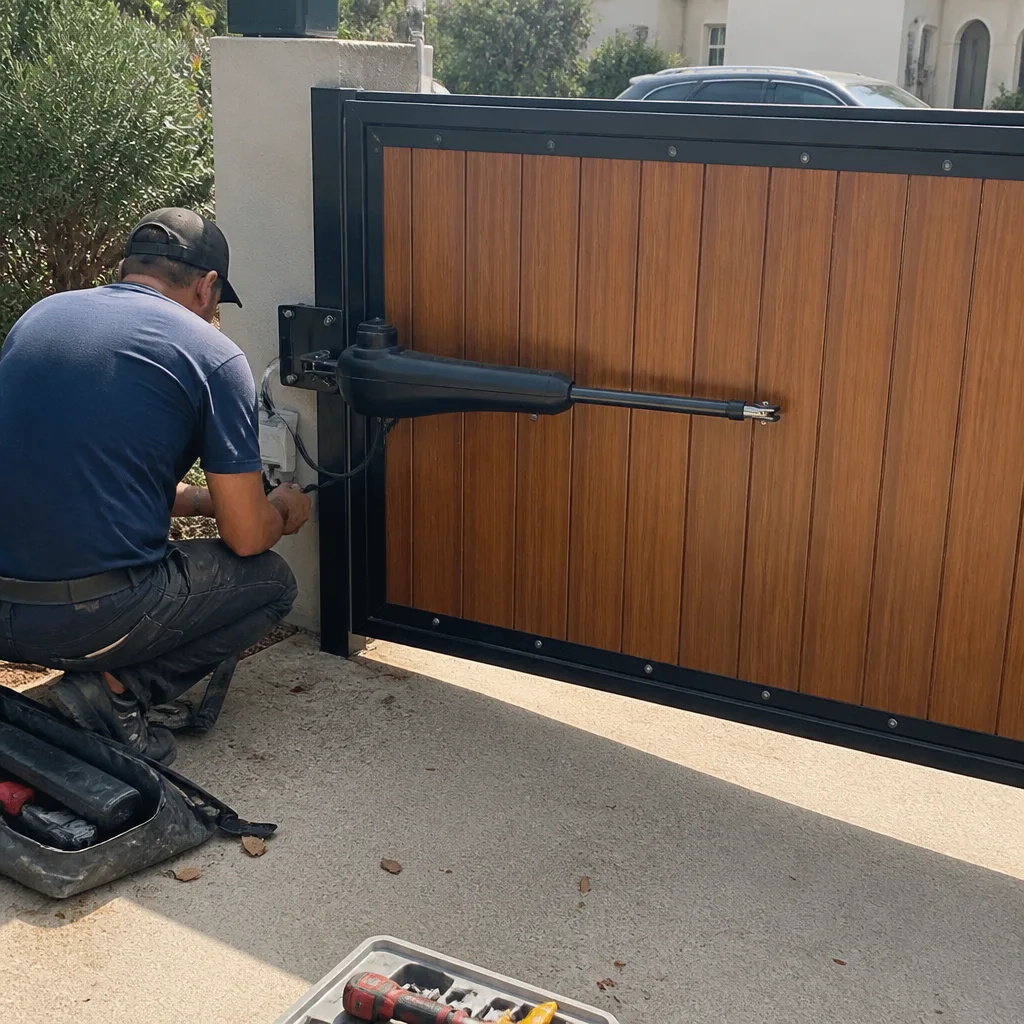 After
AfterWhen to Call a Professional
You’ve decoded the sound, logged the behavior, and identified the likely culprit. The question now is whether to call someone or keep watching. The honest answer: if you’ve noticed any of the symptoms in this guide more than once, call for Gate Repair. Early intervention on gate repairs is consistently the cheapest path, because every day of continued operation adds wear to components downstream of the original problem. A grinding roller today is a strained motor next month and a dead operator next year.
The cases that clearly call for professional help: any humming that doesn’t produce movement, any gate that reverses unpredictably or ignores its safety limits, any visible crack at a weld or hinge, any exposed electrical wiring, and any gate that’s been slow for weeks despite your best efforts to identify the cause. Warden Gate Repair Ventura offers free estimates in Ventura. Call (831) 226-7089 and a real person answers, 24 hours a day, every day of the year.
Frequently Asked Questions
Gate repair in Ventura typically costs between $180 and $650 for most component replacements, depending on the part and the brand. Minor fixes like limit switch adjustments or photo-eye realignment usually fall in the $150 to $300 range. Operator replacements on brands like LiftMaster, DoorKing, Elite, or Mighty Mule typically run $900 to $2,200 installed. The written price is always quoted and agreed before any work starts at Warden Gate Repair Ventura. Call (831) 226-7089 for a free estimate on your specific gate.
Most gate repairs in Ventura can be completed the same day or within 24 hours of the diagnostic visit, especially for common failures like rollers, limit switches, photo eyes, and capacitors. Warden Gate Repair Ventura answers calls around the clock, and emergency response for safety-critical failures is available in Ventura. Call (831) 226-7089 to check current availability and get a written quote.
A full gate installation in Ventura includes site measurement, gate fabrication or procurement to the property’s specifications, post setting or replacement, operator installation, safety system integration (photo eyes and reversing edges), and final programming of remotes and keypads. The written price covers everything upfront, and it’s agreed before any work begins. Call (831) 226-7089 to schedule a free measure and get a detailed written quote.
Yes, Warden Gate Repair Ventura handles the complete electrical scope, including the power run from the panel to the operator location, proper grounding, and installation of all safety edges and photo-eye sensors. The work is done to current electrical code and includes all necessary permits. The written quote includes the full electrical scope, so there are no surprise line items. Call (831) 226-7089 for specifics on your property.
Gate motors in Ventura’s coastal environment typically last 7 to 12 years with proper maintenance, though salt-exposed properties within a mile of the ocean often see shorter lifespans of 5 to 8 years. Regular inspection of the operator housing seals, electrical connections, and corrosion points extends the service life, and so does addressing mechanical drag problems before they overwork the motor. If your motor is humming without moving the gate, shut it off and call (831) 226-7089 for a diagnostic.
Night-only gate malfunctions in Ventura usually trace to temperature and moisture changes rather than lighting. The marine layer rolls in during the evening, dropping temperatures and raising humidity, which can cause thermal contraction in metal components and condensation in electrical connections. A gate that binds at night but works fine during the day may have marginally worn mechanical parts that cross from functional to binding when the temperature drops. It’s also possible that the gate’s low-voltage landscape lighting or irrigation timer is creating electrical interference. Document the specific timing and call (831) 226-7089 for a diagnosis.
The Bottom Line
Your gate has been talking to you. The grinding, the hesitation, the rust streaks, the slow-motion afternoon opening, all of it is diagnostic information, and the sooner you decode it, the cheaper the fix. In Ventura’s coastal environment, the clock runs faster on mechanical failures, because salt and moisture never take a day off. The homeowners who get the most out of their gates are the ones who treat warning signs like information rather than inconvenience. Document what you see and hear, know which failures demand immediate shutdown, and explore more guides & resources or call a professional who’ll give you a name, a photo, and a written price before touching anything. The 365-Day Done Right Promise means the repair is right or we make it right, with the return visit on us.
Written by Cole Rafferty, Owner at Warden Gate Repair Ventura, serving Ventura since 2008.